Every day, we receive tonnes of marketing emails, many of which are spam. In such situations, brands often struggle with getting noticed by their recipients. The reasons brands invest so much in their email marketing campaign are to get noticed, not to land in the recipient’s spam folders. Even if they manage to land in the recipient’s ‘inbox,’ they want their emails to be opened and engaged with, not being ignored.
Therefore, brands need to analyse different metrics to understand which strategy is best for their business and marketing. Accordingly, they can optimise their campaigns to boost engagement and conversions. In this regard, two very crucial metrics that businesses must analyse are email open rates and click-through rates (CTR).
What are Email Open Rates and CTR?
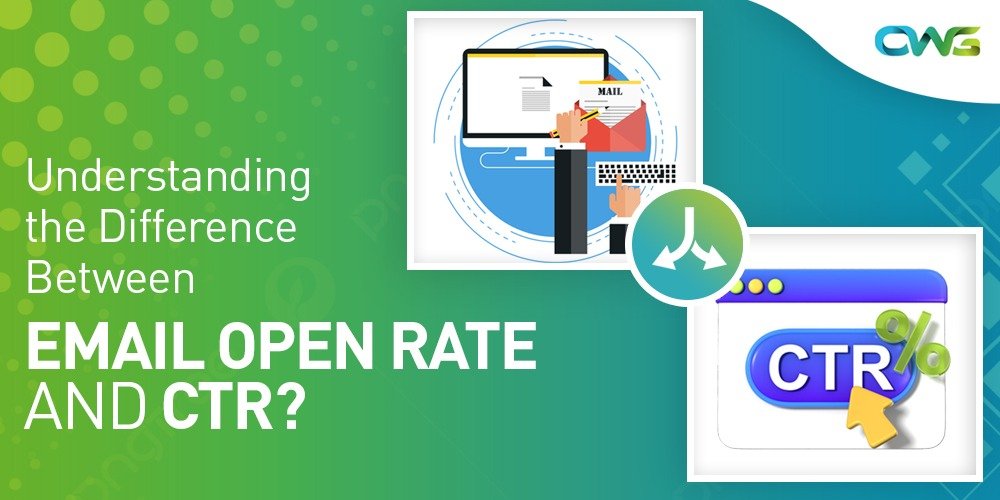
Email open rates refer to the percentage of recipients in your email marketing campaign who have opened your emails. It is calculated by dividing the total number of people who have opened your email by the total number of recipients.
CTR, on the other hand, measures the percentage of recipients who clicked on one or more links in the email compared to the total number of emails delivered.
Difference between Email Open Rates and CTR
Both email open rates and CTR play a crucial role in assessing the performance of your email marketing campaign. However, they serve different purposes.
Engagement Level
You can measure email open rates and CTR to determine engagement level. For instance, the former implies that the recipients are interested in a particular email. It indicates that the recipient finds the subject line compelling enough to open the email and view the content. On the other hand, CTR measures the engagement level to determine whether the recipient found the content engaging enough to click on the links.
Interaction Level
Brands can also measure email open rates and CTR to determine interaction level. For instance, the former implies that while recipients might have found the subject line interesting, they might not be interested in engaging with its content. On the other hand, the latter indicates that the recipient is willing to engage further with the brand and explore its offerings by clicking on the given link.
Conversion Potential
You can also assess the conversion potential of an email by measuring email open rates and CTR. Higher open rates imply that the emails have reached the right audiences. On the other hand, CTR indicates conversion potential. The reason is that the recipients who clicked on the links given in the emails are likely to go further down in the sales funnel and take the desired actions, such as buying a product, subscribing to a service, downloading an eBook, etc.
5 Common Mistakes to Avoid to Improve Email Open Rates and CTR
In an attempt to improve email open rates and CTR, brands often end up committing a few common mistakes. As a result, instead of improving these metrics, they harm them, causing poor email deliverability and engagement. Now that you understand the difference between these two metrics, let’s discuss the mistakes you should avoid.
Overuse of ‘Spam’ words
Use of aggressive sales words such as ‘buy now,’ ‘free,’ ‘limited time,’ or any form of exaggerated claims can trigger spam filters. As a result, your marketing emails will likely end up in the recipients’ spam folders. It will lead to reduced open rates and a high Apache SpamAssassin (tool used for email spam filtering) score. Therefore, you should avoid using these words in the subject line or email body.
Irrelevant subject lines
The subject line is the first thing that recipients will notice in an email. Therefore, if the subject line doesn’t match the content of the email, they will not open it. As a result, it can lead to confusion and disengagement. Hence, when creating subject lines, avoid clickbait strategies. Instead, use clear, relevant, and engaging subject lines.
Unclear call-to-action
Another reason for low CTR is the use of unclear call-to-action (CTA). If the CTA is vague or buried within the email copy, the recipients likely will not take the desired action, leading to poor engagement. Hence, you need to ensure that CTAs are clear, direct, compelling, and placed strategically so that they are clearly visible to the recipients.
Poor mobile optimisation
The majority of the recipients access emails on their mobile devices. Hence, if your marketing emails are not mobile-responsive, they will cause lower engagement and higher bounce rates. Hence, ensure that the text, images, CTAs, and other elements of your emails are optimised for mobile users for better CTR.
Ignoring audience segmentation
Sending generic emails can lead to low engagement. Hence, you should segment your audience and send customised emails based on their position in the sales funnel. It can lead to both higher email open rates and CTR. For instance, send welcoming emails to new users, ongoing offers to existing users, a reminder email to users who have added products to their cart but have not yet purchased, etc. Sending targeted emails can help increase open rate and boost engagement and conversions.
Complete Web Graphics is an email marketing agency that can help you develop effective email marketing campaigns to boost your business goals. Whether you want to set up and manage your email marketing campaigns, get in touch with our team for further assistance.