AI-Powered SEO Trends That Marketers Should Be Aware Of
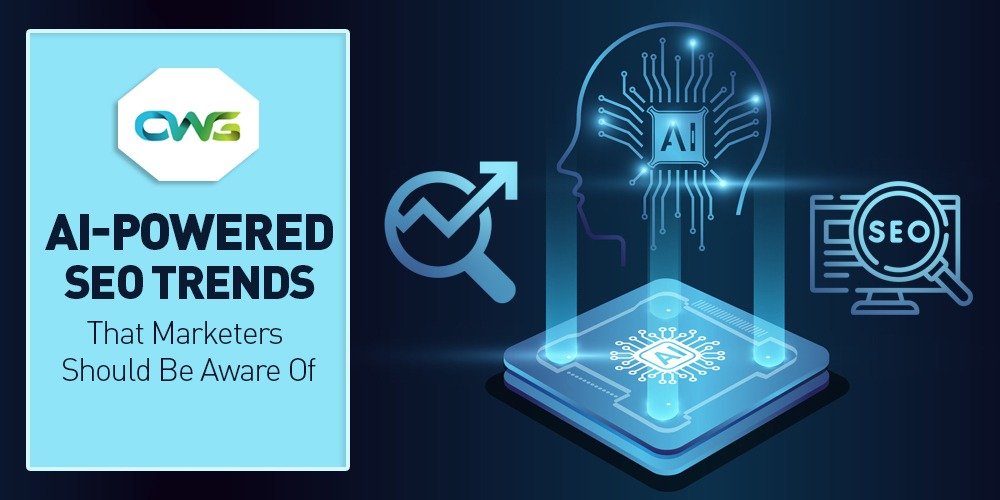
Artificial intelligence, or AI, is changing the way search engines understand content, assess intent, and rank websites. The SEO landscape is evolving with AI-driven algorithms, predictive search, voice search, and more. As a result, SEO professionals need to stay updated about these trends to help develop effective strategies for their clients improve their search ranking for AI-powered searches. This blog will discuss the AI-powered SEO trends that every marketer should know. Topical authority over keywords Keywords are still significant for SEO. However, in AI searches, the same query doesn’t generate the same answer. For the same prompt, AI searches usually generate multiple variations. Similarly, depending on individual context, urgency, preferences, etc., even the prompt can vary for the same query. AI tools don’t rank pages based on matching keywords. Instead, they look for factors, such as depth, consistency, credibility, etc., across the entire topic. Therefore, brands that cover any topic in-depth will keep appearing for related AI searches. In this regard, instead of creating content around keyword lists, plan around problems, solutions, and intent. Additionally, cover topics in depth. It implies that your content should answer the main and related questions. Optimization for AI overviews and Generative Answers Generative AI is changing search visibility. Platforms like Google’s AI Overviews scan multiple sources to generate concise answers. Hence, you need to structure your content to allow these AI systems to reference it. As AI prefers content that offers clear answers, you need to create your content accordingly. Hence, avoid fluff and ambiguity. Additionally, use headings, subheadings, bullet points, etc., to help AI analyze your content effectively. Besides, you should link your content to credible sources to allow AI to cite your content in AI-generated summaries. Therefore, by implementing these tips, you can secure a high ranking in generative AI searches. LLM optimization A significant number of users are relying on Large Language Models (LLMs) to generate answers directly on the search platform. LLM optimization ensures your content is factually accurate, easy to understand, and structured for AI citation. In this regard, highlight key topics, brands, etc., to allow AI to link your content accurately. Ensure your content follows E-E-A-T (expertise, experience, authority, and trustworthiness) principles. Further, create long-form content with in-depth discussions and references. Predictive and personalized SEO AI helps with predictive SEO, where marketers can predict user intent and emerging trends. Predictive SEO uses AI models to analyze search behaviour to anticipate keyword popularity and content demand. Using AI tools, they can identify trending queries before they get competitive. Additionally, it helps deliver tailored content based on individual preferences, thereby boosting engagement and conversions. Including predictive SEO in your overall SEO campaign will help businesses stay ahead of the competition. Collaboration of human and AI tools As the role of AI in search is gaining prominence, you cannot ignore its significance in content creation. However, that doesn’t imply that AI tools will replace human creativity. In fact, combining human creativity and AI efficiency, marketers can enhance their content strategy. For instance, you can use AI tools to get topic suggestions, create outlines or a first draft, etc. Further, by leveraging human expertise, you can improve the tone, style, and emotional appeal of the content. Doing so can help ensure that your content connects with your audience. Technical SEO automation with AI tools You can now use AI-powered tools to automate technical SEO tasks. For instance, from performing SEO audits to generating schema, these tools can help with technical SEO optimization and improve website performance. They help ensure optimizing websites for indexability, crawlability, and speed. As a result, SEO professionals can focus on building strategies and creating high-value content. Complete Web Graphics is an SEO agency. Our SEO professionals can assess your business, website, and industry to help develop effective strategies to boost your ranking for both organic and AI searches. For SEO-related assistance, get in touch with our team.
What are the different types of keywords you should use in SEO and PPC?
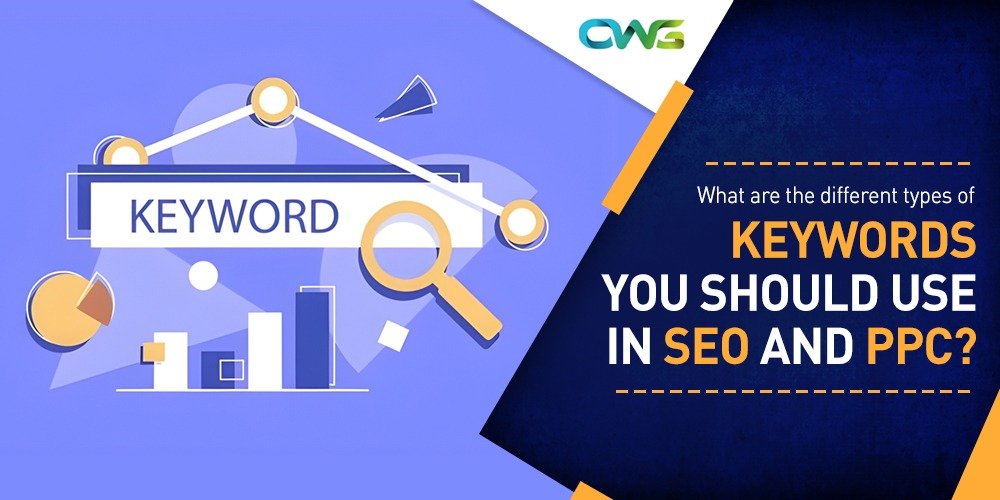
Keywords are search phrases and terms people use when looking for information, a product, or a service. Understanding different types of keywords and their purposes can allow you to use them effectively for your marketing strategies. An SEO agency in Kolkata, India can help find these types of keywords when performing keyword research. Accordingly, you can select the right type of keywords to select the right audiences. Seed/Short-tail Keywords These are short phrases to describe a topic broadly. They are the basis of keyword research and usually consist of generic terms. Example – digital marketing Pros – Have high search volumes and hence can attract huge traffic Cons – Have high competition and hence quite difficult to rank for. They don’t have any buyer intent and hence don’t help in conversion. Long-tail Keywords These are longer and highly specific search phrases. Example – digital marketing services for small businesses Pros – They have a clear search intent. As a result, they help in higher conversion rates. Cons – Compared to short keywords, they have a lower search volume. Mid-tail Keywords They fall between short-tail and long-tail keywords. Example – digital marketing strategies Pros – Have a balanced search volume and competition. Cons – Since, their competition is moderate, they might not help in higher conversion. As a result, they need to be refined for improved targeting. Primary Keywords It is the main keyword of the page. These keywords are used strategically throughout the web page, such as in URL, Metadata, Headings and Subheadings, and the body of the content. Example – For instance, we have used the primary keyword ‘create pillar and cluster pages’ for our blog ‘How can you Create Pillar and Cluster Pages for your Website’ Pros – Represent the core topic of the page and help search engines understand the context of the content. Cons – These keywords should be supported by secondary keywords and related search phrases for a better understanding of the topic. Secondary Keywords These are closely related to the primary keywords. You need to use them throughout the body of the content to support the primary keyword. Example – Taking an example of the previous point, for our blog ‘How can you Create Pillar and Cluster Pages for your Website,’ we have used secondary keywords, such as ‘steps to create pillar and cluster pages,’ ‘types of pillar pages,’ ‘content silos,’ ‘topic cluster,’ etc. Pros – Using these keywords helps increase the chances of being ranked for more related search queries. Cons – You should be mindful when using these keywords for individual web pages to avoid keyword stuffing. Intent-based Keywords These keywords are categorized based on users’ search intent. Example – Keywords with informational search intent will include questions, such as ‘how,’ ‘why,’ etc. Other if the intent is transactional, it may include words, such as ‘buy,’ ‘for sale,’ etc. Pros – Helps align content with user’s search intent. Cons – Requires in-depth analysis of user intent to determine the intent behind different keywords. Informational Keywords The search intent of these keywords is looking for information. Searchers use these keywords when they want to learn about something. Example – Keywords starting with questions, such as ‘how,’ ‘what,’ etc Pros – Helps build brand awareness, drive traffic, and establish your brand as an authority in the industry. Cons – Since they target audiences at the early stage of the buyer’s journey, they have lower conversion rates. Navigational Keywords These are keywords that searchers use when searching for a specific website or page. Example – When searchers are trying to log in to software, any social media platform, etc Pros – Help drive high-quality traffic to a specific location on a website. Cons – Unless they target a specific search purpose, they might not have a great impact on SEO Commercial Keywords Searchers use them when researching products or services. Example – Best digital marketing agencies Pros – These keywords are used by searchers who intend to purchase specific products or services soon. Hence, it helps drive high-quality prospects. Cons – Need to be supported by high-quality content, reviews, and feedback to rank effectively on SERP. Transactional Keywords The search intent behind these keywords is making a purchase or completing a specific action. Example – They include words such as ‘near me,’ ‘buy,’ ‘for sale,’ etc Pros – As they have strong purchasing intent, they have high conversion potential. Cons – Might have high competition and, hence, can have high CPC (cost-per-click) for PPC ad campaigns. LSI Keywords Latent Semantic Indexing (LSI) keywords are terms semantically related to main keywords. Example – If the main keyword is ‘digital marketing,’ the LSI keywords can be ‘SEO strategies,’ ‘SMM strategies,’ etc Pros – Help improve the relevance of your content. Cons – Requires in-depth analysis to identify appropriate LSIs for main keywords. Seasonal Keywords These keywords are popular during specific times of the year or special events. Example – ‘Christmas offers,’ ‘winter collection,’ ‘Big sale on New Year,’ etc Pros – High search volume during specific seasons, events, etc. Hence, have the potential to increase conversion during those specific times. Cons – These keywords usually have a short lifespan that lasts only during specific seasons and events. Evergreen Keywords These keywords have consistent search volume regardless of trends, seasons, or time. Example – ‘Basic SEO strategies,’ ‘how to perform SEO’ Pros – Can help drive long-term, sustained traffic Cons – Might have high competition and need continuous optimization to maintain SERP rankings. Competitor’s Keywords These are the keywords the competitors are ranking for. It would help you understand what the target audiences are searching for. Example – Analyzing competitor’s websites to identify the keywords they are ranking for. Pros – Help gain valuable insights about competitors and tap their traffic. Cons – Have high competition and might be difficult to rank for. Branded Keywords These are search terms or phrases that contain the
Full-Stack Development Trends Developers Should Know In 2024
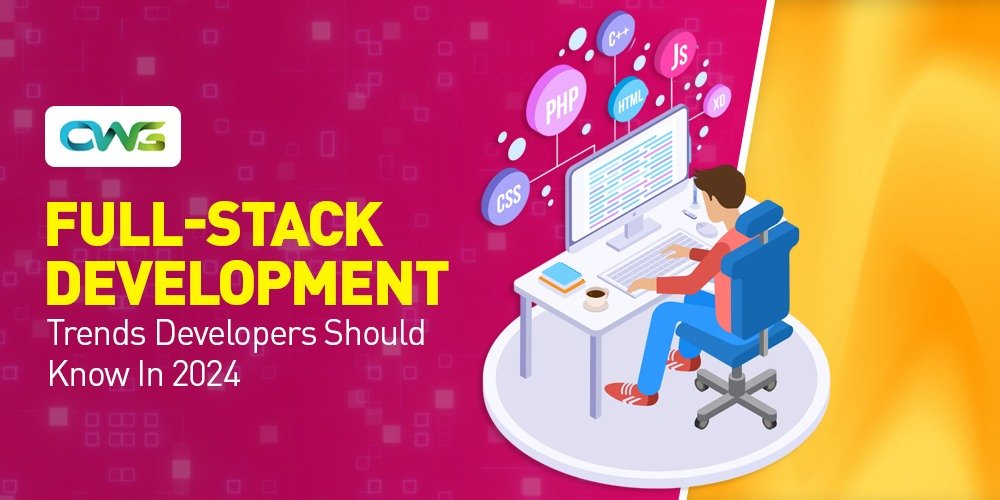
Full-stack development involves both front-end and back-end development of websites, web, and mobile applications. The front-end refers to what your users see and interact with. Some examples include images, forms, and buttons. On the other hand, the back-end involves the activities taking place in the background, like running logic, interacting with other systems, etc. A full-stack developer has the required skills and knowledge of tools for taking care of both these development aspects. This blog will discuss the full-stack development trends that a developer should be aware of in 2024. Artificial Intelligence One of the key full-stack development trends is the use of artificial intelligence (AI) in developing modern apps. It helps solve complex issues faster. Additionally, it allows systems to work without the need for human intervention. Full-stack developers understand both the design and logic aspects. As a result, they can use AI tools effectively to improve the performance and user experience of web and mobile app solutions. Internet of Things (IoT) IoT and full-stack development allow developers to build functional and connected applications. Based on specific business needs, developers can customize these applications. Combining IoT and full-stack development, businesses can monitor connected devices, collect data from them, and even automate various tasks. Cloud Computing Cloud computing allows scalable storage and processing power needed to manage, analyze, and store that volume of data. Full-stack developers can help build and manage cloud-based applications to support collaboration and performance. Knowledge of SaaS, PaaS, etc., and experience with platforms such as Google Cloud, AWS, etc., will allow developers to build cloud-based applications. DevOps It is the combination of development and operation to improve the process of software development, testing, and deployment. It allows effective team collaboration and the use of tools such as continuous integration and delivery for faster update release. DevOps helps improve application speed, quality, and reliability. It plays a crucial role in meeting the needs of efficient workflow and strong collaboration for building modern applications. Mixed Reality (AR+VR) It merges augmented reality (AR) and virtual reality (VR). It helps create new simulated environments where the physical and digital objects interact in real-time. The development of graphical processing, cloud computing, display technologies, etc., forms the basis of this reality technology. Progressive Web Apps (PWAs) PWAs with full-stack development imply that, using the same technology stack, developers can build both the front-end and back-end of an application. It helps simplify the development process and make it more efficient. Businesses can use full-stack development to build PWAs with a seamless user experience and accessibility across all devices. They can help improve audience engagement and user retention. Blockchain This technology helps store data across a network of computers, reducing the risk of hacking. Industries, such as finance and healthcare, use this technology to protect transactions and manage decentralized systems. It allows developers to build safe and reliable applications. In this regard, full-stack developers need to acquire skills in enterprise systems, Web 3 architecture, etc., to utilize this technology. Cybersecurity It involves protecting systems, networks, and applications from online threats, like malware. As this trend is gaining popularity, full-stack developers need to build secure applications from scratch. Businesses are prioritizing cybersecurity to keep their data and systems safe. Developers need to gain knowledge and skill in web application security, cryptography, secure coding practices, etc., to build secure applications. Low-code and No-code development These platforms use graphical user interfaces (GUIs) and other tools to allow full-stack developers to build websites with minimal or no code. They help save time and make development accessible to more people. As a result, they are becoming one of the popular full-stack development trends. However, they might not be suitable for complex or large-scale solutions. These platforms offer full-stack capability for faster web solution launches. Complete Web Graphics houses a team of skilled full-stack developers. Our team has knowledge and proficiency in various full-stack technologies. Additionally, they are updated about popular trends. It allows them to develop efficient websites and apps for businesses to meet their specific needs. If you need to hire our full-stack developers, get in touch with our team for further assistance.
How to Build Cost-Effective Advertising Campaigns for Marketers in 2024?
Ad campaigns play a huge role in helping brands stay relevant and drive real business results. As the market is competitive, brands cannot ignore the significance of ad campaigns. Doing so can cause them to lose out on business opportunities as their competitors are more likely to run their own ad campaigns. However, not every business has a huge marketing budget. In this regard, marketers need to limit their ad budget while making the most of their campaigns. In this blog, we will share with you a few tips to build cost-effective ad campaigns. Objectives of Ad Campaigns Identifying the objectives of an ad campaign is crucial to ensure its success. Based on their audience’s position on the various stages of the sales funnel, brands set their ad campaign goals accordingly. Awareness Stage – Brands target their audiences in the awareness stage to establish their identity or create a strong first impression. It involves presenting their overall brand, instead of individual offerings, such as a range of products or services. Consideration Stage – Brands target their audiences in the consideration stage to promote the features and benefits of their products and services. The purpose is to build a connection with their audiences. Conversion Stage – Brands target their audiences to move them from the consideration to the conversion stage. It involves creating ads to guide users to take the next step, such as purchasing a product, signing up for services, etc. Loyalty – Brands target their existing customers to foster loyalty and retain them. It might include offering loyalty programs, engaging with them regularly, etc. The purpose is to create a lasting relationship with their customers. Types of Ad Campaigns Different types of ad campaigns serve different purposes. Each type of ad target specific type of audience and has different objectives. The following are some of the types of ad campaigns that brands might focus on. Let’s discuss further. Brand identity – These ads focus on the overall brand, instead of specific products or services. The purpose is to communicate brand values and identity, and develop an emotional connection. It involves creating ads that resonate with audiences on a deeper level. Direct response – These ads focus on driving immediate engagement. They include clear and compelling call-to-actions. Such ads can be a part of a bigger advertising campaign, where you may promote exclusive deals or limited-time offers. Product launch campaigns – These ads focus on introducing new products or services. They promote the unique features and benefits of specific offerings. To run such campaigns, brands might create teasers or a sneak peek to create a sense of excitement around a product or service. Retargeting campaigns – These ads target audiences who have previously interacted with a brand or its offerings. Brands can set personalized ads to retarget audiences to boost engagement and conversions. 6 Tips To Set Cost-Effective Advertising Campaigns Now that you are aware of some of the common objectives and types of ad campaigns, let’s discuss further how to set them up cost-effectively. Determine your ad objective As we have discussed earlier, identify the objective of your ad campaigns. The clearer you are about the goals of your ad campaigns, the more effectively you can set them. Further, you can compare the results with your objectives to determine their success. It will allow you to modify and optimize your campaigns for better results. Identify your target audience Once you have determined your campaign goals, you need to identify your audiences accordingly. For instance, if the goal is to establish brand identity, you need to create a buyer persona and identify audiences in the discovery or awareness stage. Similarly, if your goal is conversion, you can target audiences in the consideration stage to convert them. Additionally, you may also focus on retargeting ads to encourage your existing customers to buy from you. Create an ad budget You need to set your ad budget. It will allow you to create cost-effective campaigns and avoid overspending. When setting an ad budget, you need to define total spend and allot it for ad testing, scaling, and ongoing monitoring. Budgeting allows you to work with actual projections. It further helps you manage expenses and increase ROI. Select the right advertising platform Different online advertising platform targets different types of audiences and serve different purposes. Therefore, consider your campaign goal and target audiences to select the right platform. In this regard, separate networks by campaign, as each network targets different audiences with different goals. For instance, if you want to target users actively searching for specific products or services, placing text-based ads on Google Search might help. On the other hand, for lead generation and conversion, Google and social media ads may help. Then again, based on your audience type, you need to select appropriate social media channels to display your ads. Test different ad formats Likely, you will not get all aspects of your ad campaigns right from the beginning. Therefore, you need to test channels, audience types, and even ad formats to see what works best for you. Ads can come in different formats, such as display ads, video ads, social media ads, etc. Investing in all the formats at the same time is not a wise decision. The reason is that every format tells a story differently. For instance, if you want to evoke an emotion, video ads might be effective. Monitor and optimize your campaign Monitoring your ads will allow you to understand what is working for your audience. Accordingly, you can make informed decisions for your ad campaigns. In this regard, check metrics such as impressions and clicks to determine if your ads are reaching the right audiences and their impact. You can also set negative keywords to avoid reaching irrelevant audiences, which will only waste your money without any meaningful results. Therefore, by following all these tips, you can develop effective advertising campaigns to target the right audiences and achieve your business goals. Complete Web Graphics is
Why Design Consistency Matters For Branding?
Design consistency is crucial for improving brand identity and recognition. Maintaining a consistent visual presence across all marketing materials helps create a memorable brand impression. It further helps in easy brand recall. Brands need to maintain design consistency to stand out from their competitors. This blog will discuss the benefits of design consistency for branding. 3 Types of Design Consistency The following are key design consistencies that brands should maintain. Visual consistency – It includes typography, colour palette, iconography, spacing, etc. Using consistent font styles, colours, and cohesive icons helps reinforce your brand identity. It ensures that every visual element contributes to a consistent, cohesive brand experience for users. Functional consistency – It involves maintaining consistency in interactive elements. For instance, the buttons should appear similar or perform similar actions, the navigation style should stay consistent across different sections, etc. Internal and External consistency – It is especially applicable for brands that offer a range of products used by different demographics. Internal consistency involves maintaining the UX consistency that a product maintains in terms of logos, colours, and other brand elements. It focuses on building brand recognition and identity. On the other hand, external consistency ensures the products feel familiar from the first use. Benefits of Design Consistency in Branding Design consistency is essential for building user trust, credibility, brand recognition, etc. Let’s discuss the benefits of design consistency in branding. Building brand image Consistent use of logos, colours, and typography can help brands become easily recognizable to their users. The visual coherence can help reinforce brand identity. Besides, it can enhance overall brand image and reflect professionalism and reliability. It can help foster brand loyalty as their audience might feel connected with your brand’s overall aesthetics. Building trust and credibility As mentioned earlier, maintaining uniformity and attention to detail is essential for users to perceive your brand as credible. Inconsistent design elements can negatively impact the perceived value of your brand. Therefore, to maintain a strong presence, increase recognition, and build a positive image, you cannot ignore the significance of design consistency. In this regard, brands need to present themselves consistently across all platforms, such as websites, social media, and marketing materials. User experience Design consistency is crucial for improving user experience. A seamless user experience helps ensure that users can navigate interfaces effectively without disruptions. Maintaining consistency of design elements, such as navigation menu, button style, colour schemes, etc., will allow users to get familiar with the ways to interact with a product or service. It will further help reduce cognitive load and allow users to focus on the tasks instead of figuring out the ways to use the interface. Thereby, design consistency helps maintain effective communication between the user and the interface. As a result, it can lead to increased user retention and loyalty. Convey a clear and cohesive message When all design elements of a brand align seamlessly across different channels, they help create a unified narrative that resonates with their customers. For instance, the consistent use of imagery or brand colours in all advertising and marketing campaigns will help brands establish an emotional tone to represent their core values. It further helps delivering consistent message regardless of the channels users interact with a brand. Ensure long-term success Following this cohesive approach for branding helps a brand stand out from its competitors and lays the basis of long-term success. Businesses need to prioritize design consistency to establish strong brand identity and image, enhance user experience, and deliver cohesive messaging, all of which can contribute to long-term success. Complete Web Graphics offers branding and design services. From website to logos to various branding and marketing elements, we can help create designs that are aesthetically pleasing and serve their purposes. You can share your branding and design requirements with our team, and we can deliver the appropriate solutions accordingly.
15 Advanced On-Page SEO Tricks to Grow Your Business in 2024
SEO is going from tough to tougher. You’re either trying to maintain your #1 ranking in SERPs or framing strategies to improve it. So, how’re you planning to re-strategize? Let’s first focus on On-Page SEO. In this blog, we’ll teach you 15 advanced tricks to take your web page to dominant ranks in the search results in 2024. Get ready to learn. Research on SERP Algorithm: SERP algorithms especially Google’s change frequently. Learn them thoroughly. Update your knowledge. This research will enable you to optimize the pages of your website. The more you learn, the more benefit you can get from it in the long run. Dig into Relevant Keywords: Obviously, keywords are significant for on-page SEO. Firstly, find your targeted audience to get the right keywords. However, there are people who start with using keyword tools. But, if you don’t know your target audience, how can you find the right keywords? Know your audiences’ interest, needs, and demographics. Accordingly, start your search. Choose Short URLs: Suppose your URL looks like this. http://www.example.com/hotels/USA-hotels/north-america-hotels/florida-hotels/orlando-hotels/ Will your audience find it easy to remember? Surely, not. But if it is like: http://www.example.com/hotels/USA/north-amarica/florida/orlando/ Then, your audience can easily remember it. You need to create short and descriptive URLs based on the topic. Choose a well-crafted semantic. Avoid stuffing the URL with too many keywords. Clean Your Title Tags: Include 2-3 keywords max in your title tag. Try to place the main keyword at the starting. Google displays the first 50-60 characters of your title. Therefore, check the length of your title. Make sure you’ve made it engaging and informative within those characters. Focus on Meta Descriptions: Your Meta description tells the search engine about the page’s purpose. So, determine what the page is about before writing its Meta description. Also, limit the words to 160-230 characters including spaces. Mind Your H2 Tags: H2 tags denote the page’s subheadings. It makes your content easy-to-read and indexable. So, pay your attention while creating these H2 tags. Include synonyms of your primary keyword in this tag. Maintain the hierarchy of the subheading tags (<H2>, <H3>, <H4>, and so on). Write Captivating Content: After all, it’s your content that the audience read. Select the topics with care. Give as much information as you can. Make it interesting to read. Furthermore, write short paragraphs. Once you finish creating the content, read it out loud. This will enable you to find out whether the content has the power to drive in traffic. Use Multi-Media Content: Inclusion of audios and pleasing yet relevant images will bind your audience for a long time. Adding videos will give you an added advantage. This content creating strategy will help you to lower the bounce rate and boost the engagement rate. Optimize Your Images: Optimizing your images is vital part of on-page SEO. Create their alt tags and descriptions. Set Your Videos Right: To reap the maximum benefit out of your videos, you’ve to optimize them. Include titles, subtitles, thumbnail images, and descriptions to enable Google to index it with ease. Include Schema: Take your page to higher rank with the help of Schema. It is a set of small data that aid Google in indexing and ranking your page. Insert Internal Links: Place internal links in your content naturally and in accordance with the content. These links will direct your readers to other pages of your website. This amazing on-page SEO tactic is practiced for years. As for instance, you can include the link of ‘Contact Us’ page in one of your Service page. In this way, you can promote your other pages simultaneously. Generate Recent Reviews: Fresh reviews add to the credibility of your website. Your users will check reviews before buying your offerings. Moreover, it will also help you to improve you site’s rank. Include FAQs: Make a separate Page or Section for FAQs. Write questions that your target audience may ask. Answer those questions in details. It will make your page user-friendly. Check Responsiveness: Mobile users are skyrocketing. You can predict that most of the users will use their mobiles to access your site. In such a situation, if your website takes a lot of time to load or it loses the functionality, your users will go away. So, develop your website to make it responsive. All the on-page SEO tricks discussed above can help you in generating huge ROI. Regarding it, you can talk to our SEO experts and let them frame a strategy for you. Click on www.completewebgraphics.com to reach us.
Popular AI-Powered Features for Smarter Mobile Apps

Artificial Intelligence (AI) is making mobile applications faster, more innovative, and more intuitive. AI-powered features are changing the way users interact with mobile apps. From voice assistants to predictive recommendations are more, these AI-powered features are changing the mobile app experience for users. Benefits of AI-powered features in mobile apps AI-powered features in mobile apps offer a highly personalised user experience. Let’s discuss the other benefits of these features. Personalisation – AI analyses user behaviour and presents customised content, product recommendations, etc. Enhanced user experience – AI-powered features, such as smart search, voice recognition, etc., help make the mobile apps more intuitive. Improved security – AI helps identify potential threats, thereby enhancing app security and protecting user data. Automation and support – AI-powered chatbots offer 24/7 efficient customer support. Improved accessibility – Advanced AI-powered features, such as image recognition, improve accessibility by making apps inclusive for all users. Popular AI-powered features in mobile apps The following are some of the common AI-powered features in mobile apps. Let’s discuss further. AI-powered chatbots These features help deliver real-time support and assistance to users. Many mobile apps use Natural Language Processing (NLP) and sentiment analysis to generate human-like conversations. These apps offer personalised interactions. Businesses often use such chatbots to improve their customer service, which further helps with their retention. Voice assistants Voice assistants, such as Siri, Google Assistant, etc., use machine learning (ML) and advanced speech recognition algorithms to answer questions, perform various tasks, etc. AI-powered voice assistants continue to improve their contextual understanding through user interactions. It further allows them to perform diverse tasks, such as making calls, setting reminders, managing smart devices, etc. These features improve accessibility, efficiency, and streamline everyday tasks. Personalised recommendation Many platforms, such as Spotify, Netflix, etc., analyse user behaviour and preferences to recommend personalised content to users. These platforms use ML models to process large datasets and accordingly recommend customised playlists, watchlists, etc. It further enhances user satisfaction and retains them. Image and facial recognition AI-based image and facial recognition apps use deep learning models to detect, analyse, and classify images and objects. Besides, such features also power authentication features in smartphones to allow secure access. Predictive text and autocorrect You can find these features in mobile apps, such as Grammarly. They leverage NLP and contextual learning to predict user input. Accordingly, they help improve writing accuracy. Based on their capability to adapt to individual writers’ writing style, they are widely used for fixing grammatical errors, suggesting words and phrases, etc. As a result, they help improve typing efficiency and communication. Smart cameras and filters These features available in apps such as Google Lens use computer vision (CV) and deep learning to identify objects, apply augmented reality (AR) effects, enhance images, etc. For instance, Google Lens uses this feature to allow users to interpret objects, texts, etc., through their cameras. Real-time language translation AI translators help in instant cross-language experience, such as live captions, voice interpretation, etc. Therefore, they help remove language barriers for global users. As you can see, AI-powered features are helping enhance the mobile app experience for the users. Complete Web Graphics is a mobile app development agency. Regardless of the type of mobile app you want to develop for your business, get in touch with our team for the required assistance.
Website Design – Key Principles Brands Should Follow
A well-designed website is crucial for holding your audience’s attention and convincing them to spend more time exploring it. Slow-loading or hard-to-navigate websites can discourage visitors and cause them to leave immediately. It can lead to a high bounce rate. To avoid such instances, it is crucial to improve your website design following key design principles. Key Principles of Website Design Your website plays a crucial role in forming a strong brand impression. Hence, you should prioritise the following website design principles to provide a great experience to your users. User Flow It is one of the critical aspects of website design that determines how users should move through your website. In this regard, consider the customer journey and the way users usually navigate your website. Accordingly, you can design the user flow on your website. Easy navigation Website navigation is crucial to improving user flow. The following elements play a vital role in improving website navigation. Header and footer – The header section lies on top of the website and should have the brand’s name, logo, and menu on it. The footer section lies at the bottom of the website and should have contact details and links to other pages on your website. Menu – You should include key pages in the menu section to make it more accessible to your users. Breadcrumbs – It allowed users to understand where they are on the website. Further, it helped users go back to the home page or other pages on the website. Search function – You may add a search function on the website to help users find the information they are looking for on the website. It will help them navigate the website easily and find the information they are looking for. Loading speed A slow-loading website can frustrate your audience, causing them to leave it before they even open it properly. Hence, ensure your website is fast-loading to keep your visitors engaged and provide them with a positive user experience. Responsive design Users may use various devices to access your website. Hence, ensure that your website is responsive, allowing users to access it across devices. Responsive websites adjust their layout and design according to the screen size from which they are being accessed. Colours When selecting colours for your website design, ensure they are visually pleasing and align with your brand. You can create a colour palette or a selection of colours and use them throughout the website. For instance, you can use colours to draw attention to special elements, such as call-to-action buttons, backgrounds, borders, etc. Typography Using the right fonts can make your website appear more professional. In this regard, select fonts that are easy to read. Further, ensure that the font size is readable across all devices. It is better to limit the number of fonts you are using on a website; otherwise, it runs the risk of making your website appear messy. Besides, the font colour should align with your brand colour. Moreover, maintain consistency in terms of using font types, sizes, bold or italic, and font colours throughout the website. Buttons Buttons are crucial as they help users navigate the website or take the desired action (purchasing a product, subscribing to services, newsletter sign-ups, etc). You should place your buttons in strategic positions, use appropriate sizes, and ensure texts are easy to read. Images and videos They can help break the monotony of the text and communicate your message effectively. Besides, they help explain the website’s content and make it more interesting and engaging. In this regard, ensure the images and videos are relevant to the content, of appropriate size according to the website’s layout, compressed to reduce file size, and have optimised alt text to describe the content of the image. Links Links make it easier for users to navigate the website. They are an essential part of website design. In this regard, ensure that your website links are easily visible and can be differentiated from the rest of the text. It is better to avoid placing multiple links close to each other. You can design the links to change colour if a mouse is hovered over them. It can help gain the audience’s interest. Use white space White space refers to the empty space between text, images, and other elements on a website. You can use this white space effectively to make your website visually appealing and make it easier for users to navigate it. Therefore, by focusing on all these principles, you can design a great website. Complete Web Graphics offers web design services to help create user-friendly websites for businesses. If you need help with designing a new website or redesigning an existing website, contact our team for further assistance.
Understanding the Difference Between Email Open Rate and CTR?
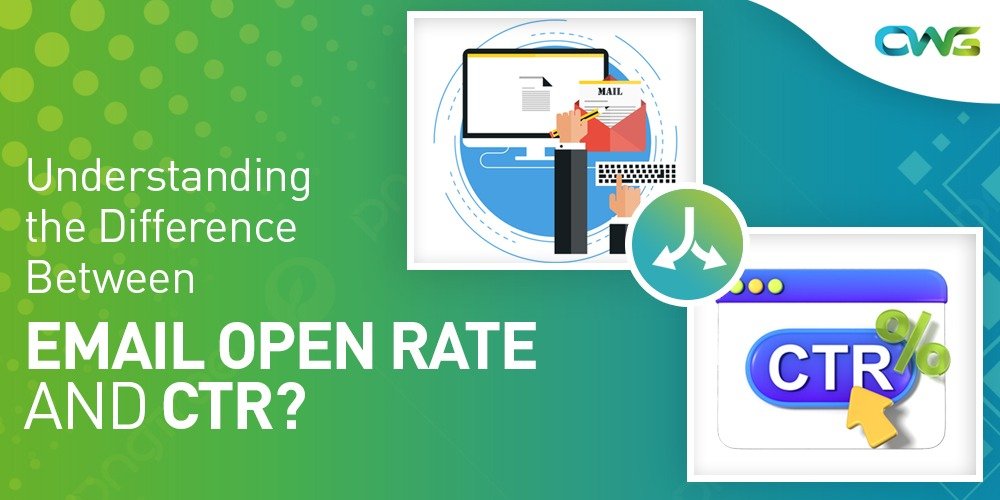
Every day, we receive tonnes of marketing emails, many of which are spam. In such situations, brands often struggle with getting noticed by their recipients. The reasons brands invest so much in their email marketing campaign are to get noticed, not to land in the recipient’s spam folders. Even if they manage to land in the recipient’s ‘inbox,’ they want their emails to be opened and engaged with, not being ignored. Therefore, brands need to analyse different metrics to understand which strategy is best for their business and marketing. Accordingly, they can optimise their campaigns to boost engagement and conversions. In this regard, two very crucial metrics that businesses must analyse are email open rates and click-through rates (CTR). What are Email Open Rates and CTR? Email open rates refer to the percentage of recipients in your email marketing campaign who have opened your emails. It is calculated by dividing the total number of people who have opened your email by the total number of recipients. CTR, on the other hand, measures the percentage of recipients who clicked on one or more links in the email compared to the total number of emails delivered. Difference between Email Open Rates and CTR Both email open rates and CTR play a crucial role in assessing the performance of your email marketing campaign. However, they serve different purposes. Engagement Level You can measure email open rates and CTR to determine engagement level. For instance, the former implies that the recipients are interested in a particular email. It indicates that the recipient finds the subject line compelling enough to open the email and view the content. On the other hand, CTR measures the engagement level to determine whether the recipient found the content engaging enough to click on the links. Interaction Level Brands can also measure email open rates and CTR to determine interaction level. For instance, the former implies that while recipients might have found the subject line interesting, they might not be interested in engaging with its content. On the other hand, the latter indicates that the recipient is willing to engage further with the brand and explore its offerings by clicking on the given link. Conversion Potential You can also assess the conversion potential of an email by measuring email open rates and CTR. Higher open rates imply that the emails have reached the right audiences. On the other hand, CTR indicates conversion potential. The reason is that the recipients who clicked on the links given in the emails are likely to go further down in the sales funnel and take the desired actions, such as buying a product, subscribing to a service, downloading an eBook, etc. 5 Common Mistakes to Avoid to Improve Email Open Rates and CTR In an attempt to improve email open rates and CTR, brands often end up committing a few common mistakes. As a result, instead of improving these metrics, they harm them, causing poor email deliverability and engagement. Now that you understand the difference between these two metrics, let’s discuss the mistakes you should avoid. Overuse of ‘Spam’ words Use of aggressive sales words such as ‘buy now,’ ‘free,’ ‘limited time,’ or any form of exaggerated claims can trigger spam filters. As a result, your marketing emails will likely end up in the recipients’ spam folders. It will lead to reduced open rates and a high Apache SpamAssassin (tool used for email spam filtering) score. Therefore, you should avoid using these words in the subject line or email body. Irrelevant subject lines The subject line is the first thing that recipients will notice in an email. Therefore, if the subject line doesn’t match the content of the email, they will not open it. As a result, it can lead to confusion and disengagement. Hence, when creating subject lines, avoid clickbait strategies. Instead, use clear, relevant, and engaging subject lines. Unclear call-to-action Another reason for low CTR is the use of unclear call-to-action (CTA). If the CTA is vague or buried within the email copy, the recipients likely will not take the desired action, leading to poor engagement. Hence, you need to ensure that CTAs are clear, direct, compelling, and placed strategically so that they are clearly visible to the recipients. Poor mobile optimisation The majority of the recipients access emails on their mobile devices. Hence, if your marketing emails are not mobile-responsive, they will cause lower engagement and higher bounce rates. Hence, ensure that the text, images, CTAs, and other elements of your emails are optimised for mobile users for better CTR. Ignoring audience segmentation Sending generic emails can lead to low engagement. Hence, you should segment your audience and send customised emails based on their position in the sales funnel. It can lead to both higher email open rates and CTR. For instance, send welcoming emails to new users, ongoing offers to existing users, a reminder email to users who have added products to their cart but have not yet purchased, etc. Sending targeted emails can help increase open rate and boost engagement and conversions. Complete Web Graphics is an email marketing agency that can help you develop effective email marketing campaigns to boost your business goals. Whether you want to set up and manage your email marketing campaigns, get in touch with our team for further assistance.
Key YouTube SEO Strategies Marketers Should Include in Their Campaign In 2023
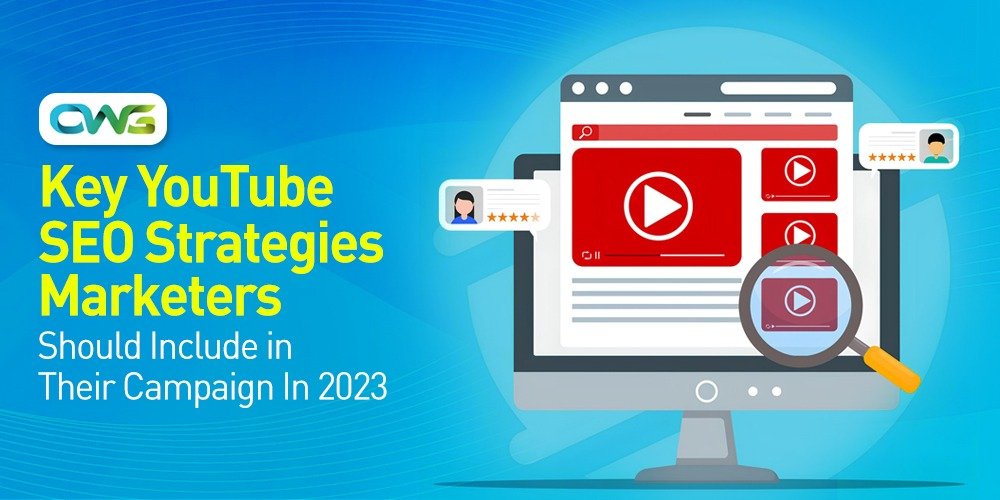
YouTube SEO plays a crucial role in boosting your videos’ visibility, driving traffic, and enhancing your online presence. It involves improving a video or a channel’s visibility in YouTube search results. In this regard, an SEO professional plans and implements a wide range of strategies, including keyword research, optimising videos, creating thumbnails, etc. 9 YouTube SEO Tips to grow your Channel YouTube is a free, online video-sharing platform that allows users to upload, watch, share, and even comment on various types of videos. If you plan to include video marketing in your campaign, YouTube is one of the ideal platforms to do so. However, creating and uploading a video on YouTube is not enough. You need to optimise them to boost their visibility for related YouTube video searches. In this section, we will discuss some of the effective strategies you can implement in 2023 to boost your YouTube videos’ online presence and grow your channel. Perform keyword research Keywords are vital for both SEO and PPC campaigns. Unless you are aware of the phrases people use when searching for different content, you cannot optimise your YouTube videos. Hence, you need to perform in-depth keyword research to identify the keywords your target audience will likely use when searching for content similar to yours. Google prioritises displaying relevant results to audiences. Hence, optimising your videos for relevant keywords will improve their chances of ranking high on YouTube search results for related queries. Optimise videos Now that you have identified relevant keywords, it is time to use them to optimise your videos. In this regard, you need to use the right keywords for the right videos and place them in the title, tags, and description of each video. Doing so helps YouTube understand the context of your content and accordingly display it for related searches. The better you can optimise your videos, the higher the chance of them reaching the right audience. Create playlists You should organise your videos in a playlist to make it easier for your audience to find related content. Creating video playlists can help YouTube understand your content better and improve audience engagement. Use timestamps to improve the user experience You can use timestamps to mark key moments in your videos. It helps viewers to focus on the key aspects of the videos. Additionally, if they are searching for specific information, timestamps will allow them to jump to the right section accordingly. For audiences who have less attention span or lack the time to watch the entire video for specific information, this strategy will work well. Besides, it helps YouTube understand the context of your video content. As a result, when audiences look for specific information, YouTube or even Google can take them to the right section of the video. Both these aspects will help improve SEO. Create custom thumbnails Creating an appropriate thumbnail for your video is crucial, as it helps determine whether people will click on your video or not. Ensure creating a thumbnail that is interesting and helps you stand out from the crowd. You should accompany it with a descriptive and easy-to-understand title. Using a visually appealing design that reflects your video content will increase its chances of getting more clicks and views. Use the right hashtags Using appropriate hashtags for your videos is crucial to make them more searchable on YouTube. You should use the right hashtags in titles and descriptions. The hashtags are often phrases that people use when searching for content. Therefore, you can identify appropriate hashtags during your keyword research phase. However, avoid using excessive hashtags as that might negatively impact your YouTube SEO strategies. Be consistent Maintaining a consistent schedule of video uploads can help YouTube identify you as a dedicated user. Regularly posting new content and staying active in the YouTube community can help improve views and audience engagement. Besides, YouTube will likely prioritise channels that are consistent with their video uploads. Link-building If you want your videos to rank high on YouTube searches, you need to develop effective link-building activities. Ensure that you earn quality backlinks for your YouTube videos from authority websites. Promote Your Videos Along with all these steps, you need to promote your YouTube videos. In this regard, you can promote them on your website, different social media channels, and other online platforms. It will help you earn more videos for your videos. Additionally, it may help create more opportunities for earning backlinks from reputable websites. Besides, the higher views and engagement your videos receive, the better it will be for improving your visibility on YouTube searches. Therefore, by following all these tips, you can boost your YouTube SEO performance. Complete Web Graphics is an SEO agency in India that can help develop effective SEO strategies to boost your videos’ visibility and ranking for relevant YouTube searches organically.