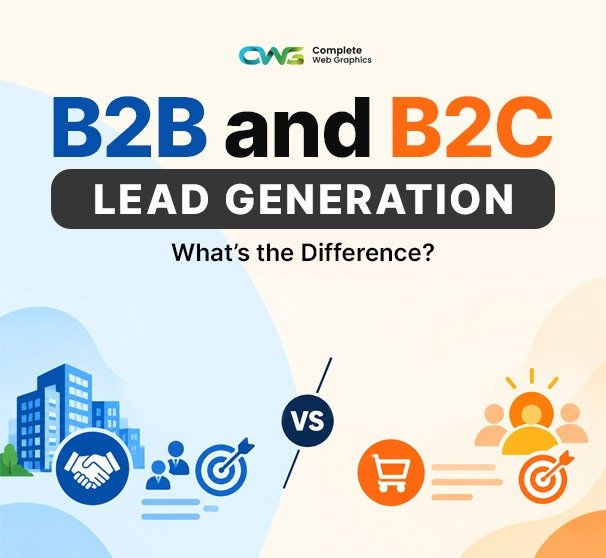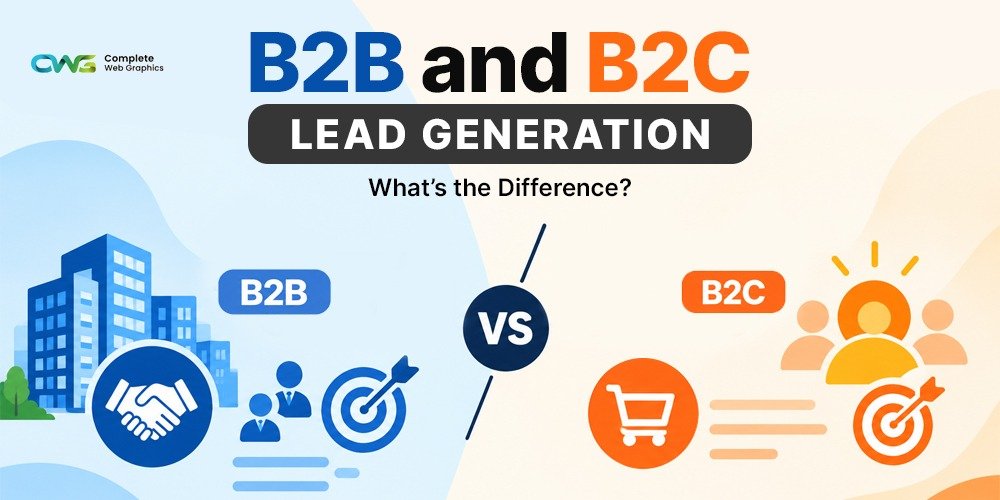
B2B lead generation focuses on attracting businesses. It also involves guiding decision-makers toward a sales conversation. On the other hand, B2C lead generation involves encouraging individual customers to buy, sign up, or take the desired action. Understanding their differences will allow marketers to focus on the right methods, channels, and audiences to build a sales pipeline.
What Is B2B and B2C Lead Generation?
To understand the difference between B2B and B2C lead generation, let’s discuss what each of them involves. B2B lead generation focuses on attracting other businesses that may benefit from a product or service that a B2B vendor offers. Because B2B purchases often involve higher costs and longer commitments, businesses usually want more information before they buy. They may want to compare vendors, calculate ROI, speak with a sales representative, or get approval from senior management.
B2C lead generation focuses on attracting individual consumers and encouraging them to take a specific action. Consumers often do not need a lengthy approval process before making a decision.
Differences between B2B and B2C lead generation
The difference between B2B and B2C lead generation lies in the following aspects. Let’s discuss further.
Difference in buyers
In many companies, a B2B purchase decision involves several people with different priorities. Hence, B2B lead generation often takes longer. For instance, B2B buyers may include the following-
- Founders or business owners focusing on growth, cost, and long-term value
- Managers aware of day-to-day problems
- Procurement teams comparing pricing, contracts, and vendor terms
- Finance teams reviewing budgets and expected returns
- IT, legal, or compliance teams assessing security, integrations, and risk
On the other hand, B2C buyers are individual consumers.
Difference in buyer journey
B2B buyer journey
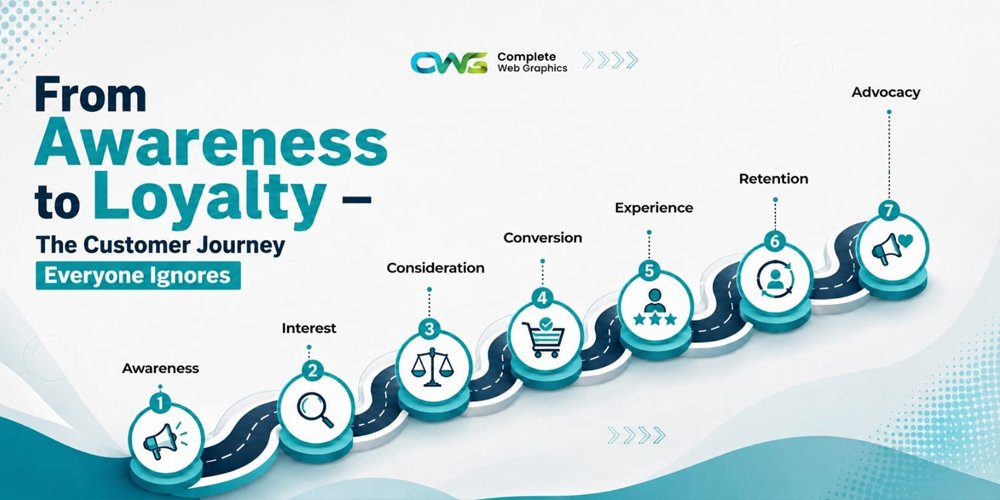
The B2B buyer journey is usually longer and involves the following stages.
- Awareness – In this stage, a business identifies a problem and accordingly looks for solutions.
- Consideration – In this stage, the company researches available solutions. Team members may read blog posts, compare vendors, download guides, watch demos, and review case studies.
- Decision – The business requests a demo, trial, proposal, or contract review. Multiple stakeholders may be involved before a final decision is made.
Because the process might take weeks or months, B2B marketers need strong lead-nurturing systems. A lead who downloads a whitepaper may not be ready to buy immediately, but they could become a customer later if the business stays helpful and visible. Hence, relationship-building is critical to B2B lead generation. Trust, credibility, and clear proof of results often matter as much as the product itself.
B2C buyer journey
The B2C buyer journey is usually shorter, direct, and involves the following stages.
- Awareness – In this stage, a consumer discovers a product through social media ads, Google search, influencer posts, etc.
- Consideration – In this stage, consumers compare options based on price, reviews, features, availability, and delivery time.
- Decision – In this stage, consumers purchase a specific product or service
For B2C brands, the priority is to make the conversion seamless. Clear pricing, strong visuals, customer reviews, mobile-friendly design, simple CTAs, a smooth checkout process, etc., can make a major difference in B2C conversions.
Difference in lead generation channels
The following are differences between B2B and B2C lead generation channels.
Lead generation channels for B2B brands
B2B companies often focus on channels that help them reach professionals and build credibility.
- LinkedIn organic and paid campaigns – These methods are useful for targeting people by job title, industry, company size, and seniority.
- Cold email and personalized outreach – These channels are effective when messages are relevant, research-based, and focused on a real business problem.
- SEO for buyer-intent keywords – Optimizing websites around these types of intent-based keywords can help businesses attract prospects actively searching for their solutions.
- Webinars, industry events, etc. – These types of content can help educate prospects and encourage audiences to share their contact details.
- Referral and partner programs – These strategies can encourage existing customers to refer new ones.
Lead generation channels for B2C brands
B2C companies often prioritize channels that create awareness quickly and encourage immediate action.
- Social media ads – These campaigns are ideal for visual products, lifestyle brands, etc.
- Influencer and affiliate marketing – These marketing methods help brands gain trust through creators their audience already follows.
- Google Search and Shopping ads – These methods are effective for capturing consumers who are actively searching for a product.
- Email automation – Brands can send personalized emails to convert abandoned carts into sales, promote special offers, send order updates, and encourage repeat purchases.
B2C campaigns often depend more on paid social, influencer marketing, and promotional offers. The goal is to capture attention, create desire, and make conversion simple.
Difference in content strategy
Content plays a major role in both B2B and B2C lead generation, but its purpose changes.
B2B content should help a business make a confident, low-risk decision. On the other hand, B2C content should spark interest and make it easy for a consumer to act.
B2B content to generate leads
B2B buyers want to know whether a solution will solve their problem, deliver a return, and work within their existing systems. Ideally, it should include the following types of content –
- Case studies showing measurable results – They can help convince clients that a solution can reduce costs, save time, or increase revenue.
- ROI calculators and comparison guides – These are helpful for buyers in the consideration stage.
- Whitepapers, reports, and industry research – They help improve brand authority.
B2C content to generate leads
Ideally, B2C content should include the following –
- Product videos and user-generated content – It shows real people using the product in everyday situations.
- Customer reviews and testimonials – They help build trust.
- Seasonal offers and discount campaigns – They help create urgency and encourage immediate action.
Difference in metrics to track
Tracking the right metrics helps you measure the efficiency of your lead generation strategy.
B2B Metrics
The following are the key metrics B2B brands should track.
- Marketing-qualified leads (MQLs) – Leads that show enough interest or fit to be passed to sales.
- Sales-qualified leads (SQLs) – Leads that the sales team has reviewed and considers ready for direct follow-up.
- Demo bookings – A strong indicator of purchase interest in many B2B businesses.
- Cost per lead and cost per opportunity – Shows how efficiently your campaigns generate valuable prospects.
- Pipeline value and customer acquisition cost: Helps measure revenue potential and profitability.
- Sales-cycle length: Reveals how long it takes for a lead to become a customer.
B2C Metrics
The following are key metrics that B2C brands should track –
- Cost per acquisition – How much it costs to gain a paying customer.
- Conversion rate – The percentage of visitors who complete the desired action.
- Add-to-cart rate – Shows how well product pages encourage purchase intent.
- Return on ad spend – Measures whether paid campaigns are generating profitable results.
- Email and SMS opt-in rate – Indicates how effectively you are building an audience for future marketing.
- Average order value – Helps measure revenue per customer and identify upselling opportunities.
B2B and B2C lead generation share the same basic goal, which is generating leads and converting them into business. However, their strategies vary. Whether you are a B2B or B2C brand, Complete Web Graphics can help develop customized strategies to generate leads for your business.